Showing posts with label Temperament. Show all posts

Wednesday, December 12, 2018

Californian Rabbit: Albinsm Red Eyes and Himalayan Point Markings

Temperament, Origin and Care tips for Siamese Cats of the Rabbit World


Aside from the common bunny breeds that are popular as Pets, beauty and companionship can also be found in the lesser common breeds such as the Californian Rabbit! Little seal-point markings and red-eyes make this breed unique— but history tells us they were bred for other reasons initially...
Beautiful Californian Rabbit
via Tayto2010 on Flickr


History and Origin


Named after its origin, this breed is also known as Californian White, and was first developed for its meat and fur. Crossbreeding New Zealand Whites (without Angora genes), Standard Chinchilla (for coat density) and Himalayan Rabbits (for seal point markings) enabled George. S. West in achieving the Californian Rabbit breed in 1923, Lynwood, Southern California.
Three Californian Rabbits
via Aarabbits
The first Californian bunny to be exhibited at a show was during 1928. Acceptance as an official breed by the ARBA (American Rabbit Breeders Association) happened much later in 1939. Today, Cali Rabbits are prized for its multi-purpose capabilities, especially for its charm as a domestic companion.


Californian Rabbit Appearance 


Size — Relative large sized Rabbit, weighing an average range of 3.5 to 4.8kgs.


Features — Bearing close resemblance to New Zealand Whites and Himalayan Rabbits, Californian Rabbits have red-eyes due to Albinism in genes and dark coloured seal-points on ears, nose, feet and tail.
Four Californian Rabbits standing over lattice
via Pinterest
Fun Fact #1      Pigmentation can sometimes be affected by surrounding climates! Coldness might result in "smut-like staining" on white areas. Natural molting of fur returns the coat to its original shade of White☺    


Colours — Seal-point colouration standards varies for different countries for show Rabbits:
  • United Kingdom — Black, Blue, Lilac and Choco point
  • United States — only Black point

Fun Fact #2      Lighter variants of seal-points on a Californian Bunny are common results of further cross-breeding, usually with New Zealand Rabbits to meet food demands.


Californian Rabbit Grooming Requirements


Regular brushing at least once every 2 weeks with a bristled comb is required for this breed's short, dense and coarse hair with an undercoat. Molting/shedding process calls for an increase in brushing and combing, preferably 1 to 2 times weekly. 
Two Californian Rabbits eating corn cob
via Pinterest
Baths are not advised for fastidious creatures like Rabbits. Water baths are in fact said to be very stressful for bunnies, not forgetting that they are also highly susceptible to cold. Since it is impossible to rule out chances of dirt getting stuck on their coats, check for debris frequently, especially in areas like the rears, ears and eyes!


Hot Tip      Not all Buns are tidy! Clean off soiled areas quickly by spot cleaning with a damp cloth. Towel dry very thoroughly after. Regularly check for long nails, clip away whenever necessary!

If you are unsure how to perform some of these tasks, bring them in for a professional grooming session by an experienced or trusted Groomer for small animals!


Temperament and Behaviour


Being a prized breed tells us this breed isn't all just for show. Despite being known worldwide for meat, fur and excellent show Rabbits, the inquisitive, friendly, active and playful nature of a Californian Rabbit makes them a desirable companion as well. Accompanied with a mild temperament, adaptability to surroundings and human contact can be easily cultivated with patience and a whole lot of self-exploration around the home. With proper care and love, a Californian Rabbit's average lifespan is 5 to 10 years.


How To Care For a Pet Rabbit


Feed — Good quality fresh Hay such as Timothy Hay is necessary provides your Bun with sufficient fiber, aside from daily servings of food pellets and greens. 


Hot Tip #2      Note to only introduce greens to rabbits above 8 weeks of age. Fruits can also be given in tiny proportions as an occasional snack or treat.


Hygiene — Maintain the cleanliness of your Rabbits home! A routined frequent change of food, water, bedding and litter is mandatory. Clear out their litter trays daily, and check for soiled bedding (Infection risks are high especially with a messy Bun! Accidentally consuming or sitting in their own waste over long periods is absolutely not good)


Californian Rabbit sitting in blankets
via Pinterest
Cage & Litter — Pick a suitable cage: 

  • Wire/Grill flooring — Make sure the gaps aren't too wide, and that there is a solid area for your pet Rabbit to rest its feet.
  • Solid flooring cage or enclosure — Litter-train your Buns by introducing a litter tray filled with litter (i.e. wood based pellets) and add in some feeding hay to entice them.


Bedding & Toys — Avoid Pine and Cedar wood based beddings to prevent potential respiratory problems well-known to occur for small animals. Keep your Rabbit(s) entertained with toys and hiding spots within their space when you're not available. Prevent overgrown teeth by providing wooden chew toys and chewable snacks.


You might also be interested in:


Your Stories Can Be Heard Too

Do you own a Bun? Share your story with the rest of the world! Your voices are important to us and the Pets community! Our readers are encouraged to share their Pet-related reviews of a place and its services, experiences, even lifestyle tips and tricks to better our Pets lives, on our platform, one paw at a time. Be a part of an educational and informative Pets community because at ThePetsDialogue, your voices could make a huge difference on a global scale. 

Write to us at [email protected] today!

Our website is a work in progress, however, if you did find our articles interesting please do feel free to share! For more Pet care tips and other Pet-related articles, head to www.thepetsdialogue.com☺


Disclaimer

This article was written with informational purposes, as you know, we’d love to share our collective research and experiences as fellow Pet owners and lovers. It is not meant to alternate in any way as advice or diagnosis of Professionals.

ThePetsDialogue claims no credit for images posted on this article unless otherwise displayed/stated. All rights go to respective owners as mentioned. If you do not wish for your image(s) to appear here do drop us an e-mail and it will be removed promptly. If you do wish to use any of our original published information, you are welcome to contact us!

Wednesday, September 12, 2018

Sphynx Cat: The Naked Truth On The Breed's History, Personality And Care

Fun Filled Facts About The Sphynx Cat And How To Care For One!


Curious about naked Cats? Sphynx Cats are one out of a few Cat breeds that are seemingly naked; they have the appearance of not having hair on their bodies. The secondary charm of the Sphynx is how they remind us the Bastet, an Egyptian Goddess of protection and Cats. Looking like a prominent figure as such got some folks wondering— Are Sphynx Cats friendly?
via TheWrinkleBabes on Instagram
Fun Fact #1      The spelling of this Cat breed is often confused with legendary Egyptian monuments of the mythical creature Sphinx. You'd be all too familiar with this creature— the head of a human topping off the body of a lion down on all fours.


The Sphynx Cat


Sightings of Cats with little to no hair is not peculiar news, reports have occurred throughout history! The lack of hair on this particular Cat breed was brought about by selective breeding programs in the 1960s, carried out by breeders in Europe. The Sphynx Cat we know of today had two separate founding roots— possibly derived from crossing the Canadian Sphynx (alternative name to Sphynx) and other hairless Cat breeds from Russia, such as the Peterbald or Donskoy. 

Toronto, Canada — Prune, a hairless kitten was born to a Domestic Short hair Cat named Elizabeth. Prune was then mated with his mom Elizabeth, and their offspring had one hairless kitten. This incident is known and considered as the first attempt that marked the beginning of Sphynx Cats.
Sphynx Cat sitting on towel
via Pinterest
These naked Cats were eventually bought by Ridyadh Bawa, a Science graduate from the University of Toronto. Together with his mother Yania whom was a long time Siamese Cat breeder, and two other Cat fanciers Kees and Rita Tenhoves, developments to establish the Sphynx Cat breed began— this included discovering that the hairless gene is recessive. The breeding program was successful in producing fertile kittens and finally received provisional breed status by CFA (Cat Fanciers' Association), but this status was voided in 1971 due to fertility concerns.


Fun Fact #2      Early breeders had very little knowledge of the genetics behind hairless Cats. This led to many unfortunate results which were fatal in some cases.
Sphynx Cat mother and kitten
via Pinterest
Ontario, Canada — Breeding attempts commenced again in 1978 when Shirley Smith encountered 3 hairless kittens in the streets. In 1983 she sent 2 kittens (Punkie and Paloma) to Netherlands for Dr. Hugo Hernandez to carry out the breeding process with a White Devon Rex Cat. This produced a litter of 5 kittens with 2 males whom were used to carry on with the breeding program.

Minnesota — The origin of Sphynx Cats found in Wadena, Minnesota were hairless stray Cats at the Pearson Family barn. These hairless Cats named Epidermis and Dermis were then sold to Kim Mueske, a breeder in Oregon, marking a significant contribution to the Sphynx breeding program. 


Sphynx Cat Appearance


Despite being easily mistaken for having no hair at first glance, Sphynx Cats actually do have a fine coat of hair, only realizable by touch.

Size — Sphyx Cats are a medium sized breed with muscular bodies. The average weight of an adult ranges from 2.7 to 3.6kgs.

Features — Thin coat of hair that is suede-like to the touch, an adorable round tummy and a prominent wedge head and large ears the shape of a lemon. Their tails should be tapered like a whip.
Blue Sphynx Cat
via Pinterest
Colours — A myriad of colours and patterns are available for the Sphynx, since hair is not entirely visble, pattern variations are known as markings (pigment on their skins) instead. Some colours include Black, White, and Chocolate. Coat patterns range from Tortoiseshell, Calico, and Pointed.


Fun Fact #2      Unlike other Cat breeds, Sphynx Cats do not have hair inside of their ears and have thicker paw pads. The hair on their tails can also sometimes resemble that of a Lion.


Sphynx Cat Grooming Needs

Sphynx Cats do not shed, eliminating the usual need of combing and/or brushing. But easy care does not necessarily come with hairless Pets. In fact, a little more care has to be taken when it comes to grooming your Sphynx Cat. Natural body oils that are produced are normally absorbed by hairs of a Cat, and given that a Sphynx only has so much hair, chances of build up on their skin is high— bath them once a week or two.
How to bath a Sphynx Cat
via RawJellyFish on Tumblr
Sun-burn is unfortunately very real for Sphynx Cats, be sure to avoid long outdoor activities and keep exposure to the Sun to a minimum. Similarly in the cold, take precaution in keeping your Sphynx warm, the lack of hair limits bodyheat conservation— seeing a Sphynx with a sweater put on by their owners is not a baffling sight at all! Perform a scrupulous cleaning of ears, skin folds and nails for accumlated dirt at least once or twice a week.

If you are unsure how to perform these tasks, approach an experienced and trusted Groomer or Veterinarian for professional advice and/or services!


Fun Fact #3      The allergic reaction toward Cats isn't actually caused by hair or fur— it's via a protein found in Cat saliva or glands that produce protective oils. Though reports have shown that many have less of an allergic reaction toward Sphynx Cats, they aren't exactly hypoallergenic.


Sphynx Cat Personality and Temperament


As stoic as their expressions seem, you'd be glad to learn that Sphynx Cats are rated one of the friendliest and most affectionate breeds out there! Highly sociable and intelligent, Sphynx Cats are known to greet their owners and are always within close proximity. 
Cute Sphynx Cats in sweaters
via Elleooelle on Tumblr
They do this so much that some folks have a funny theory behind a Sphynx's clingy behaviour besides affection— what better way to gather up body heat from human warmth! With proper care and love, the average lifespan of a Sphynx Cat is 20 years.


Fun Fact #4      One might think that a hairless kitty might deter the likings of a Cat lover, but you'd be surprised to know that the Sphynx Cat actually ranks 8th in terms of popularity for Cat breeds! 


You might also be interested in:


Your Stories Can Be Heard Too

Do YOU have a story to share? We’d love to share your stories with the world! Your voices are important to us and the Pets community! Our readers are encouraged to share their Pet-related reviews of a place and its services, experiences, even lifestyle tips and tricks to better our Pets lives, on our platform, one paw at a time. Be a part of an educational and informative Pets community because at ThePetsDialogue, your voices could make a huge difference on a global scale.

Write to us at [email protected] today!

Our website is a work in progress, however, if you did find our articles interesting please do feel free to share! For more Pet care tips and other Pet-related articles, head to www.thepetsdialogue.com ☺


Disclaimer

This article was written with informational purposes, as you know, we’d love to share our collective research and experiences as fellow Pet owners and lovers. It is not meant to alternate in any way as advice or diagnosis of Professionals. 

ThePetsDialogue claims no credit for images posted on this article unless otherwise stated. All rights go to respective owners as stated. If you do not wish for your image(s) to appear here do drop us an e-mail and it will be removed promptly. If you do wish to use any of our original published information, you are welcome to contact us!

Wednesday, August 29, 2018

Shetland Sheepdog: Are Shelties Miniature Versions Of A Rough Collie?

Sheltie Dog History, Intelligence, Temperament and Care Tips!


Shetland Sheepdogs may not be the as well-known around the world as compared to other Dog breeds, but this does little to change the fact that they are still very much loved by many. Perhaps we might have even mistaken Shetland Sheep Dogs for a Collie— ever wondered why this "Collie" seems so much smaller in size? 
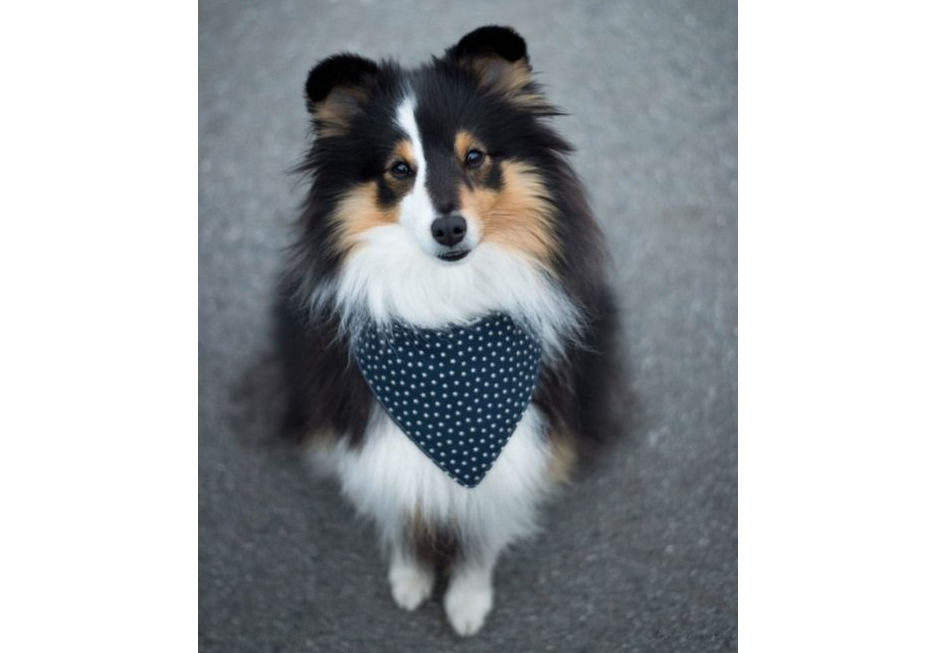
Beautiful Sheltie with cute bandana
via ZeldatheSheltie on Tumblr

Fun Fact #1      The Shetland Sheepdog breed was given the name Shetland Collie initially. Today, they are also known as Sheltie for short.


Shetland Sheepdog


Shelties are a breed of Dog from the Shetland Islands in Scotland best known for purpose with herding. While they were originally given the name Shetland Collie in the past, this caused a long standing dispute with Rough Collie breeders— which brought about the change of the breed's name to Shetland Sheepdog, as we know of today. Understandably, it wasn't just because the names were clashing, Shetland Sheepdogs looked remarkably similar to Rough Collies too. Shelties like other animals from Shetland Islands (i.e. Ponies and Sheeps), were bred to cope and withstand against the harsh weather conditions on the islands.

Fun Fact #2      The OG sheep-herding Shetland dogs were regarded as a Spitz-type dog. They no longer exist as their jobs were taken over by Border Collies. 
Shetland Sheepdogs personality
via KyleandKodi on Tumblr
Although the animals are miniatures of their own kind, Shetland Sheepdogs are not a smaller version to the Rough Collie. The original "concoction" is still shrouded in mystery— breeds involved included the Scottish Collie, King Charles Spaniel, Pomeranian and also the much rumoured Border Collie. Only much later were small Rough Collies added to the equation by James Loggie, contributing to the Sheltie version we see today. In 1909, the Shetland Sheepdog breed got recognized by the EKC (English Kennel Club), and in 1911, by the AKC (American Kennel Club). 

Fun Fact #3      Did you know, the modern Shetland Sheepdog we know of today is uncommon in their native lands? Interestingly, they are also not used for sheep-herding purposes!   


What Does A Shetland Sheepdog Look Like?


From mere photographs of individual breeds, its is rather inevitable to mistake a Sheltie for a Rough Collie and sometimes, colour variations can have them confused with other breeds like the Border Collie, and even the Australian Shepherd Dog.

How do you tell a Sheltie from a Rough Collie if they look so similar?

Sheltie Size — A Shetland Sheepdog is a small Dog breed. In size comparison itself, the Rough Collie is way larger than a Sheltie— also the reason why Shelties are thought of as a miniature version of the Rough Collie.
Size comparison of a Sheltie and Rough Collie
Left: Sheltie Right: Rough Collie — via Wikipedia

  • Sheltie — Average weight 5 to 11 kgs, standing 33 to 41cm tall.
  • Rough Collie — Average weight 22 to 31 kgs, standing 55 to 66 cm tall.

Sheltie Features — Double coat made up of a soft undercoat, and rough guard hairs above. Bushy plush tails hang low most of the time, and are only lifted when alert or excited. Only Blue Merle Shelties may have Blue eyes, or Odd-eyes (one Blue, one Dark), all other Sheltie colour variations have brown or dark eyes.
Blue Merle Blue Eye Sheltie
via Pinterest
Fun Fact #4      The double coat of a Sheltie is useful in all weather conditions— rough guard hairs are water-resistant, while the soft undercoat provides just the right insulation. 


Sheltie Colours — Sable, Tri-colour and Blue Merle are three colour variations of Shetland Sheepdogs. These variations can range from Brown shades to Golden and even Reddish-brown with White and/or Tan. Predicting how much White will appear on a Sheltie is not as simple as breeding two Shelties with minimal White— a coloured variant Pup is possible between two predominantly White Shetland Sheepdogs too.
What does a Sheltie look like?
via RockyFarr on Flickr
Fun Fact #5      Shelties with more than 50% White on their coats do not fair well in scoring at Dog shows, lesser White is much preferred with Judges for breed standards.


Grooming A Sheltie


The beautiful plush coat of a Shetland Sheepdog sheds quite substaintially. Grooming maintenance requires copius brushing and combing, preferably 2 to 3 times per week— soft undercoats are prone to matting, pay closer attention to areas around the joints, ears, neck and tail.

How to groom a Sheltie
via SheltieBeauties on Blogger
Trim their nails so they do not get too long and start clacking on floors, and swab out dirt build-up in the ears and around the eyes with a dog-friendly cleanser and cotton balls if necessary. To keep your Sheltie's coat healthy and ease up your grooming efforts, visit a professional Groomer at least once every one or two months.


HOT TIP      Owners are advised not to opt for shaving— once shaved, the coat of a Sheltie may not regrow as smoothly to it's original state. Shaving is also reported to be harmful for their skin.


Shetland Sheepdog Personality and Temperament


Known as one of the most loyal and ranked highly for intellegence, Shelties fair really well with training and are often top choices in competions involving agility and obedience. Walks and playtime keeps a Sheltie feeling happy and purposeful. Active, playful, and loving, Shelties are also favourites to families. 
Shetland Sheepdog temperament
via KyleandKodi on Tumblr
It almost seems like there isn't anything a Shetland Sheepdog can't provide as a companion— they're make great therapy Dogs too! Topped off with an even temperament, they'd make a great addition to any home. With lots of love and proper care, a Sheltie's average lifespan ranges from 12 to 13 years.


Fun Fact #6      Shelties are reportedly one of the fastest at grasping a command as compared to other Dog breeds. Got a farm? Don't forget their innate ability for Sheepherding! A friend, companion and working breed is a Shetland Sheepdog ☺


You might also be interested in these:


Your Stories Can Be Heard Too


Got a Sheltie of your own? Your voices are important to us and the Pets community! Our readers are encouraged to share their  Pet-related reviews of a place and its services, experiences, even lifestyle tips and tricks to better our Pets lives, on our platform, one paw at a time. Be a part of an educational and informative Pets community because at ThePetsDialogue, your voices could make a huge difference on a global scale.

Write to us at [email protected] today!

Our website is a work in progress, however, if you did find our articles interesting please do feel free to share! For more Pet care tips and other Pet-related articles, head to www.thepetsdialogue.com ☺


Disclaimer

This article was written with informational purposes, as you know, we’d love to share our collective research and experiences as fellow Pet owners and lovers. It is not meant to alternate in any way as advice or diagnosis of Professionals.

ThePetsDialogue claims no credit for images posted on this article unless otherwise displayed/stated. All rights go to respective owners as mentioned. If you do not wish for your image(s) to appear here do drop us an e-mail and it will be removed promptly. If you do wish to use any of our original published information, you are welcome to contact us!